
You don’t have to ban Halloween candy to protect your kids’ teeth — what matters most is which candy they eat, when they eat it and how quickly their teeth get cleaned afterward. As a family dentist in Cedar Park, we help local parents strike that balance every October, so trick-or-treating stays fun and checkups stay cavity-free.
Here’s our practical guide for Cedar Park families before the big night.
Why Halloween candy causes cavities
Cavities form when bacteria in the mouth feed on sugar and produce acid that wears away tooth enamel. The longer sugar and acid sit on teeth, the more damage they can do. That’s why how often and how long kids snack matters even more than the total amount of candy.
A pile of candy eaten at once after dinner is far kinder to teeth than the same candy nibbled all afternoon.
The best and worst Halloween candy for teeth
Easier on teeth
- Plain chocolate — it melts quickly and rinses away more easily than sticky treats. Dark chocolate is lower in sugar.
- Sugar-free gum (especially with xylitol) — chewing boosts saliva, which helps wash away food and neutralize acid.
- Powdery candy that dissolves quickly — less time stuck to teeth.
Hardest on teeth
- Sticky and chewy candy — taffy, caramels, gummies and fruit chews cling to the grooves of back teeth.
- Sour candy — it’s both sugary and acidic, so it softens enamel quickly.
- Hard candy and lollipops — they bathe teeth in sugar for minutes at a time.
- Very hard or crunchy candy — can chip teeth or break off a filling.
6 tips to protect kids’ teeth this Halloween
- Eat candy with meals, not all day. Saliva production is higher during meals, which helps clear sugar. Set a “candy time” after dinner instead of grazing.
- Drink water. In Central Texas, Halloween night is often still warm. Water rinses sugar away and keeps kids hydrated — much better than soda or sports drinks.
- Wait before brushing after sour candy. Rinse with water, then brush 30–60 minutes later so acid-softened enamel isn’t scrubbed away.
- Brush twice a day and floss. Two minutes, fluoride toothpaste, and floss to clean between teeth where sticky candy hides.
- Try a “candy trade.” Let kids pick a few favorites and trade the rest for a small toy, a book or a family outing.
- Don’t forget the grown-ups. Parents raid the candy bowl too — the same rules apply to adult teeth.
For more family oral-health tips, the American Dental Association’s consumer site, MouthHealthy, is an excellent resource.
A Halloween-night game plan for parents
A little planning makes the night easier for everyone:
- Before you head out: serve a real dinner first. Kids who trick-or-treat on a full stomach eat less candy along the way.
- While trick-or-treating: carry water bottles and save the candy for home. Cedar Park evenings can still be warm in late October, and water beats sugary drinks for both hydration and teeth.
- Back at home: sort the haul together. Set aside sticky, sour and hard candy, let kids choose a handful of favorites, and decide on a plan for the rest.
- Before bed: brush for two minutes with fluoride toothpaste and floss. This is the most important brush of the night, because saliva flow drops while we sleep.
Kids with braces or Invisalign
Halloween needs extra care if your child is straightening their teeth:
- Braces: avoid sticky, chewy and hard candy completely — caramels, taffy, nuts and hard candy can bend wires or pop off brackets. Soft chocolate in moderation is the safest choice.
- Invisalign aligners: always take aligners out before eating any candy, then brush (or at least rinse well) before putting them back in. Sugar trapped under aligners sits against teeth for hours.
Treat ideas that are kinder to teeth
Handing out treats on your street this year? Consider options that are fun and tooth-friendly:
- Sugar-free gum or mints with xylitol
- Small packs of pretzels or cheese crackers
- Non-food treats such as stickers, glow sticks, pencils and bubbles — great for kids with food allergies, too
Even swapping just some of your bowl for non-candy treats helps lower the total sugar load in your neighborhood.
How sealants help protect against cavities
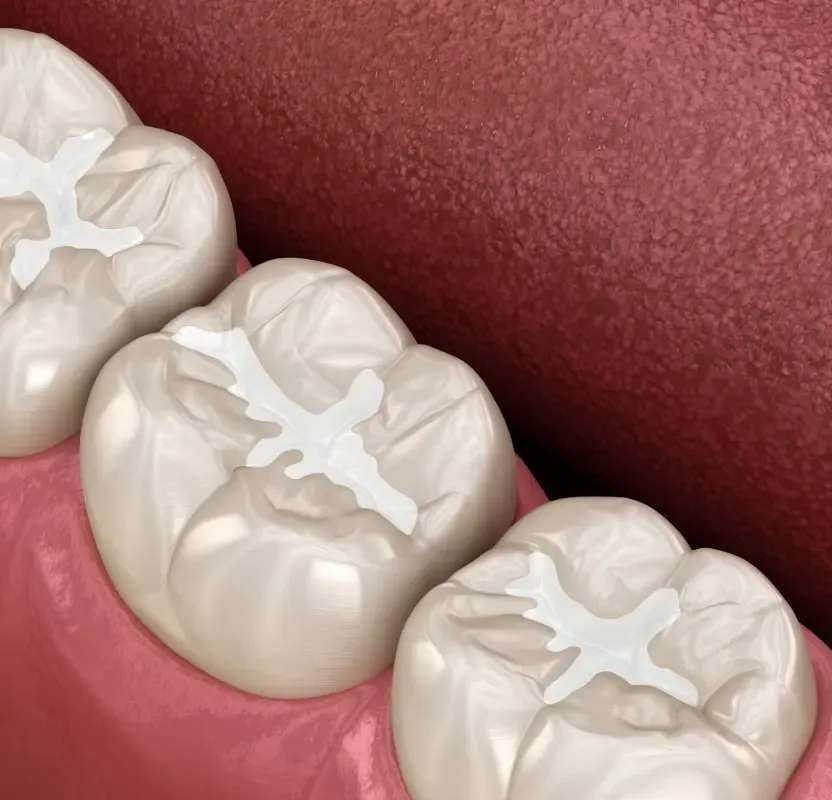
Most children’s cavities start in the deep grooves on the chewing surfaces of back teeth — exactly where sticky candy gets trapped. Dental sealants are a thin, painless coating that seals those grooves. Placing them takes just a few minutes per tooth, with no drilling or numbing, and they can protect molars for years. Insurance often covers sealants for patients under 18 — including Delta Dental and most PPO plans.
Signs your child should see the dentist
Book a visit if your child has:
- Sensitivity to sweets, hot or cold foods
- A tooth that hurts when chewing
- White, brown or dark spots on a tooth
- A chipped tooth or a lost filling after biting something hard
Small cavities found early can usually be fixed with a quick, tooth-colored filling. If a tooth breaks or your child is in pain, we offer same-day emergency appointments.
A family-friendly dentist in Cedar Park
From Buttercup Creek to Twin Creeks, Cedar Park families trust Town Center Dental Cedar Park for gentle, fun visits that kids actually enjoy. Dr. Samir Momin and our team see children from their very first tooth, and we can book the whole family back-to-back so you’re in and out in one trip. Our office on E Whitestone Blvd is near Costco Cedar Park, and our team speaks English, Spanish and Hindi.
November is a great time for a post-Halloween checkup and cleaning — and it’s also the perfect time to use your dental benefits before they reset on January 1. Call (512) 670-8880 or book online to schedule your family’s visit with your Cedar Park family dentist.
Happy (and healthy) Halloween from all of us at Town Center Dental Cedar Park!